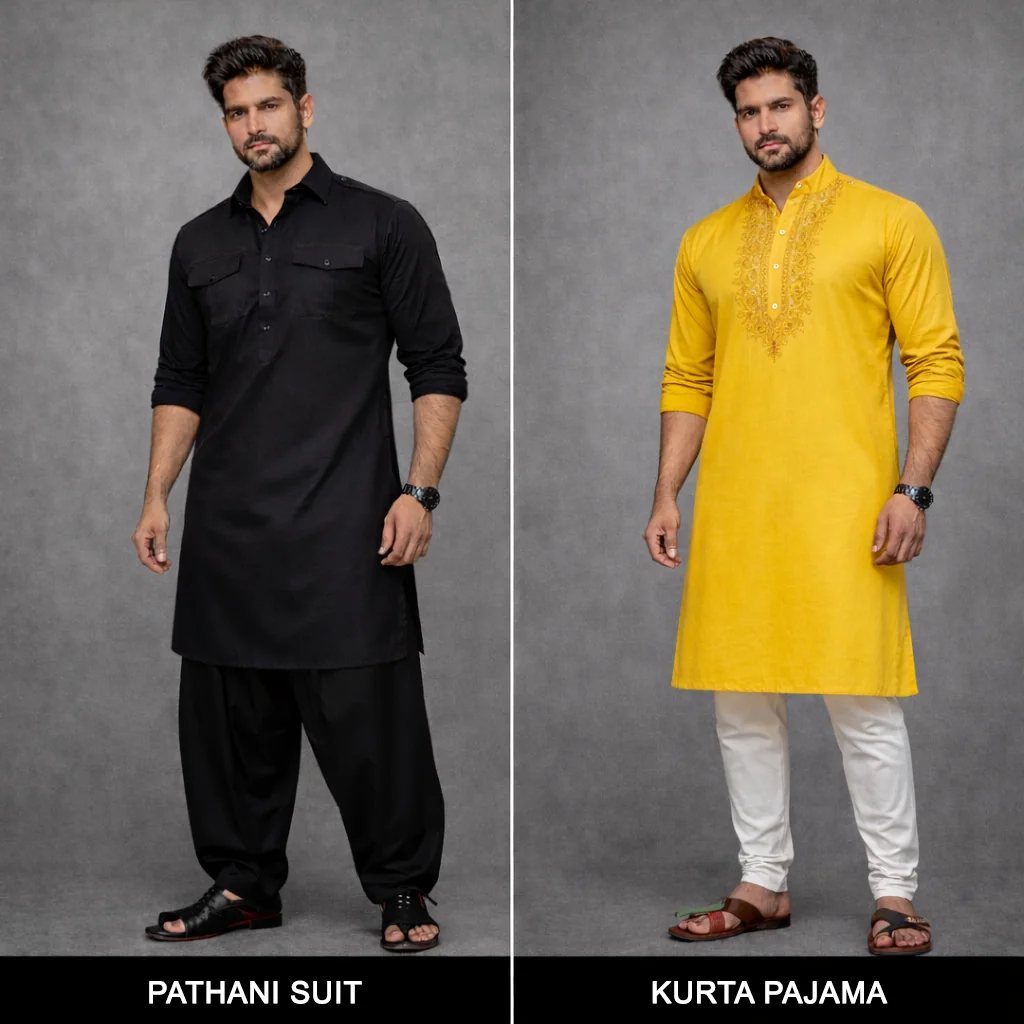
The main difference in Pathani Suit vs. Kurta Pajama is the silhouette: Kurta Pajamas offer a relaxed, traditional drape, whereas Pathani Suits provide a structured, military-inspired fit that builds a broader shoulder profile.
Most men treat them as interchangeable. They are not.
While both are staples of ethnic fashion, they serve two completely different purposes. One is designed to blend in; the other is designed to stand out. One whispers respect; the other commands attention.
If you are confused about which one to wear for your next event, you are in the right place. We are breaking down the fit, the vibe, and the “Rutba” factor to help you decide.
Understanding the Basics: What is the Difference?
The main difference between a Pathani Suit vs. Kurta Pajama is the silhouette: A Kurta Pajama features a straight cut with side slits for a relaxed drape, whereas a Pathani Suit features a structured shirt collar, double chest pockets, and a rounded hem (Apple Cut) that builds a broader, more masculine shoulder profile.
Before we declare a winner, let’s look at the construction. The difference isn’t just in the name; it is in the DNA of the garment.
The Kurta Pajama: “The Classic”
The Kurta is the backbone of Indian ethnic wear. It features a straight cut, side slits (chak) for movement, and usually a simple mandarin collar or no collar at all. It is almost always paired with a Churidar (tight-fitting pants that gather at the ankle) or a straight Pajama.
- The Vibe: Elegant, soft, linear.
- The Origin: Rooted in the traditional attire of the Indian plains.
The Pathani Suit: “The Commander”
The Pathani is a different beast entirely. Originating from the rugged terrains of the North, it was essentially a combat and travel uniform before it became fashion.
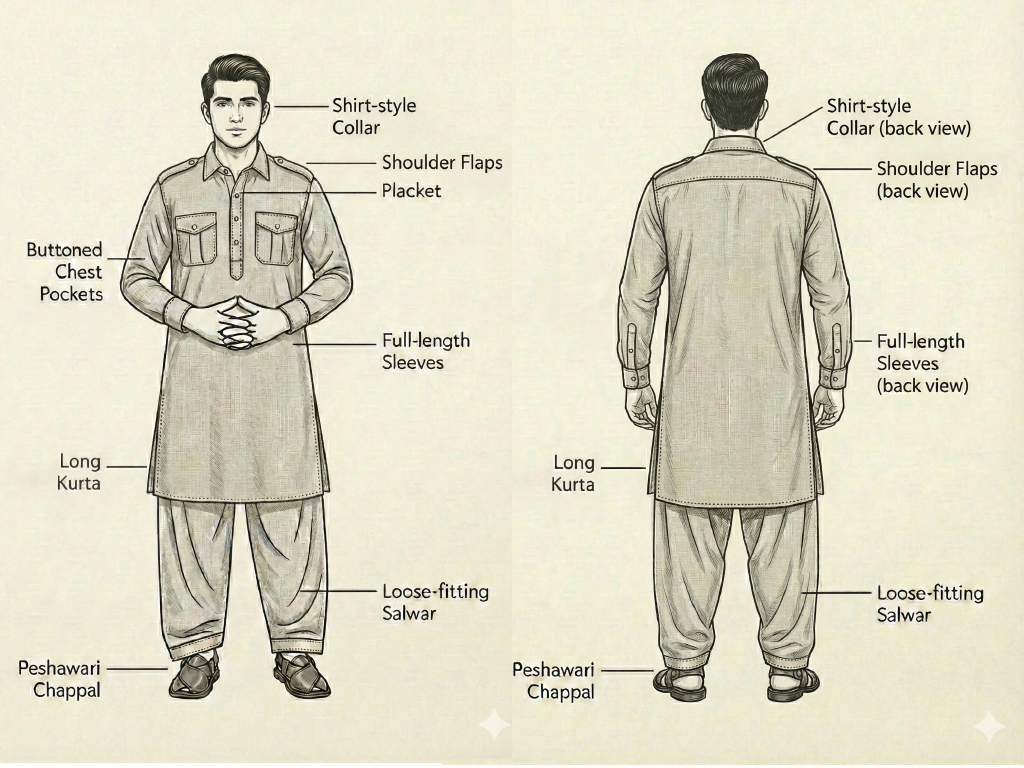
It features a Shirt Collar (stiff and structured), pockets with flaps on the chest, and typically buttoned cuffs. The hem is often rounded (apple cut). It is paired with a Salwar—a loose, balloon-style pant that tapers slightly at the ankle but stays wide for mobility.
- The Vibe: Masculine, structured, broad.
- The Origin: The mountains of Kabul and the Pashtun regions.
Round 1: The “Vibe” Test (Rutba vs. Respect)
Fashion is communication. What do you want to say when you walk into the room?
Wear the Kurta Pajama when you want to show Respect.
If you are attending a Puja, a religious ceremony, or visiting your in-laws for the first time, the Kurta Pajama is your safety net. It says, “I am traditional. I am humble. I am part of the family.” It blends beautifully into the background of a wedding ritual.
Wear the Pathani Suit when you want to establish Authority (Rutba).
The Pathani is not for blending in. The double chest pockets add visual bulk to your torso, making your chest look broader. The collars frame your face aggressively.
When you walk into a Sangeet or a Cocktail party wearing a structured Midnight Black Pathani, you aren’t asking for attention—you are demanding it. It separates you from the crowd of guests wearing generic beige kurtas.
Winner:
- For Puja/Rituals: Kurta Pajama.
- For Parties/Reception: Pathani Suit.
Round 2: Body Type Suitability
Not every cut suits every man. Here is the honest truth about which style flatters your specific build.
For Skinny or Lean Men: The Pathani Wins
This is the secret weapon for slimmer guys. A standard Kurta can sometimes make you look like a straight line or a “stick.”
The Pathani Suit adds volume. The loose Salwar adds weight to your legs, and the chest pockets create a V-shape illusion for your upper body. It makes you look physically larger and more imposing.
For Heavyset or Broad Men: The Tie
- The Kurta Argument: A straight-cut Kurta is excellent at hiding a belly. The vertical lines elongate your body.
- The Pathani Argument: Many big guys avoid Pathanis because they fear the “loose” fabric will make them look bigger. This is a myth. A well-tailored Pathani (especially in dark colors like Black or Navy) actually structures your shoulders, drawing the eye up to your face and away from the midsection.
For Shorter Men: Proceed with Caution
The Pathani Salwar has a lot of fabric. If the Kurta is too long (below the knee), it can swallow you up and make you look shorter.
- Pro Tip: If you are under 5’7″, get your Pathani Kurta tailored to end just above the knee. This exposes more leg and balances your height.
Round 3: The Comfort Factor
Let’s be real—Indian weddings are marathons. You are eating, dancing, and sitting for hours.
The Mobility Check:
Have you ever tried to sit cross-legged on the floor in a tight Churidar? It restricts blood flow. The Kurta Pajama can feel restrictive during high-movement events like the Baraat dance.
The Pathani, however, was designed for riding horses and climbing mountains. The Salwar captures air, keeping you cool, and offers zero resistance when you move. It is essentially the “tracksuit” of ethnic wear—supreme comfort disguised as formal wear.
Winner: The Pathani Suit (Hands down).
The Final Verdict: When to Wear What
Still undecided? Here is the cheat sheet.
| Feature | Kurta Pajama | Pathani Suit |
| Best Occasion | Puja, Haldi, Morning Weddings | Sangeet, Reception, Night Parties, Eid, Diwali Nights |
| Primary Vibe | Soft, Elegant, Traditional | Bold, Masculine, “Don” Look |
| Footwear Pairing | Kolhapuri, Mojari, Sandals | Peshawari Chappal, Loafers, Boots |
| Best Fabric | Silk, Light Cotton, Jacquard | Heavy Cotton, Linen, Denim |
| The “Rutba” Score | 6/10 | 10/10 |
How to Style Your Pathani for Maximum Impact
If you have chosen the Pathani route, you need to wear it right. A sloppy Pathani looks like a nightsuit. A sharp Pathani looks like armor.
- The Sleeve Roll: This is non-negotiable. Don’t just push your sleeves up. Fold them neatly 3/4th of the way up your forearm. It exposes your watch and forearms, adding to the rugged look.
- The Button Rule: Never button the top button (unless you are freezing). Leave the top button open to let the collar spread naturally.
- The Footwear: Do not ruin a ₹3,000 suit with ₹200 rubber flip-flops. Invest in a pair of sturdy Peshawari Chappals or polished leather Loafers.
- Layer It: For a winter wedding, throw a textured Sadri (Nehru) Jacket over your Pathani. It instantly upgrades the outfit from “Casual” to “Groom’s Squad.”
Conclusion: Silence is Loud
The Kurta Pajama will always be a classic. It is safe, respectful, and timeless.
But we believe that in a sea of safety, there is value in danger.
The Pathani Suit is for the man who has outgrown the need to just “attend” an event. It is for the man who wants to own the room. Whether you choose the Midnight Black or the Commando Olive, remember: it’s not just about the cloth. It’s about how you carry it.
Ready to command the room?
Explore the Midnight Series at Pathani.in—crafted with high-count Bengal cotton for the modern Indian man.
Frequently Asked Questions (FAQ)
Q1: Can Hindus wear Pathani Suit?
Answer: Absolutely. Fashion has no religion. The Pathani Suit is a massive trend for Festivals, Diwali nights, Sangeet nights, Cocktails, and Wedding receptions across all cultures in India. It is viewed as a “Style Statement,” not a religious one.
Q2: Which shoes look best with a Black Pathani suit?
Answer: Peshawari Chappals are the most authentic choice. For a sleek, modern look, try Black Velvet Loafers or Chelsea Boots. Avoid sports shoes at all costs.
Q3: Is a Pathani suit formal?
Answer: It is “Socially Formal.” It is perfect for parties, festivals, and weddings. However, it is generally not suitable for corporate boardrooms or job interviews.
Q4: How should a Pathani suit fit?
Answer: The shoulders should be sharp and fitted (like a shirt). The chest should be comfortable but not baggy. The Kurta length should fall around the knees. The Salwar should be loose but not dragging on the floor.